-
ACHCEW
- COMMITTEES
-
CHCs
- Introduction to CHCs
- CHC Regulations
- How CHCs Worked
- Code of Conduct for CHC Members
- Code of Practice on Consultation
- Public Activities Material
- CHCs in Action - (Publication)
- The Politics of Consumer Representation - A Study of CHCs
- The Legal History of CHCs
- Legal - re. Closures
- Directory of CHCs + LINks >
-
Training and Skills for Members
>
- Skills for New CHC Members
- Understanding the NHS and the Role of the CHC
- Developing Skills as a CHC Member
- Links to CHCs and Charities Database
- Skills for CHC Chairs
- Other Training Documents
-
PPI Short Courses
>
- Introduction and Surveys
- Core 1 - User Involvement in Health and Social Care
- Core 2 - What does User Involvement Mean?
- Core 3 - Feeling Empowered in User Involvement
- Theme 1 - Involvement in Service Planning and Improvement
- Theme 2 - Involvement in Research and Activity
- General Units
- Link Person Handbook
-
Papers
- IN-HOUSE Staff Publications - Introduction >
- CHC Listings
- CHC News >
- CHC Public Activities Materials
- NHS Dispute - Complaint
- Presentations >
- Foundation Trust Hospitals
- GMC
- Healthwatch England
- Health Scrutiny
- House of Commons Health Committee
- ICAS
- King's Fund
- Normanton Hospital Inquiry
- PALS
- Local Involvement Networks - LINKs
-
PPI + LINks
>
- PPI Academic
- PPI in the NHS >
- Patient Empowerment >
- Public Representation of Health Bodies
- Women's Health Publications >
- Enter and View
- LINks Foundation Trusts
- Kingston Hospital + Kingston PCT LINk
- Public Involvement in the Private Finance Initiative
- Response to the Health Committee Report
- Private Hospitals
- PUBLICATIONS
- PRESS
- Cartoons
- Gallery
How ACHCEW Worked ...
The Director
____________________________________________________________________________
The Director was responsible for the day-to-day running of ACHCEW reporting to the Honorary Officers and the Standing Committee. All the staff reported to the membership through the Director. The Director was also the public face of ACHCEW, representing the organisation on many Committees, as well as in the media. The Director also drew up the Agenda for the Standing Committee on a wide range of policy issues, in conjunction with members of the staff.
____________________________________________________________________________
The Director was responsible for the day-to-day running of ACHCEW reporting to the Honorary Officers and the Standing Committee. All the staff reported to the membership through the Director. The Director was also the public face of ACHCEW, representing the organisation on many Committees, as well as in the media. The Director also drew up the Agenda for the Standing Committee on a wide range of policy issues, in conjunction with members of the staff.
The Policy Department
____________________________________________________________________________
The Policy Department played a key role in promoting a national CHC perspective on the future of the NHS. Working with the Director and the Standing Committee, the Department reflected and developed the Policy of the Association. It covered a whole range of health policy issues - from handling enquiries from CHC offices, through researching and writing ACHCEW Reports and Briefings, to meeting Civil Servants and MPs.
The main roles of the Policy Department were:
Developing a Future for CHCs
There was little change to the legal framework for CHCs since they were created in 1974. ACHCEW had played a leading role, calling for new powers and additional resources. The Association convened a Commission, chaired by Will Hutton, Editor-in-Chief of The Observer, to consider how CHCs could develop to maximise contributions to the NHS. The Policy Department supported the Commission in this work.
Promoting CHCs through the Media
The Policy Department liaised with the media, providing advice and information to reporters and researchers. It issued Press Releases on the work of ACHCEW, and frequently represented CHCs nationally in interviews. ACHCEW received considerable news coverage for initiatives such as the Nationwide Casualty Watch and its report ‘Hungry in Hospital?’
Parliamentary Liaison
The Policy Department kept MPs in tune with the patient perspective on NHS developments. It developed a database of MPs supportive of CHCs and serviced the all-party Parliamentary Group alongside briefing MPs on NHS Legislation and its effect on patient care.
An Information Service
The Policy Department advised and supported individual CHCs. It kept databases on CHC publications and projects, and other publications, as well as a library of documentary material on relevant issues.
CHC Surveys
With its nationwide coverage, CHCs were a unique source of reliable information of patients’ concerns. The Policy Department conducted regular surveys of CHCs, to bring this information together for publication, and to influence the development of the NHS.
Representing CHCs Nationally
Members of the Policy Department gave presentations to, or represented ACHCEW at numerous Conferences and meetings, including those held by the Department of Health, the NHS Executive, professional bodies and Royal Colleges. It also worked together with other patient and voluntary organisations.
Responding to Consultations
As a statutory national representative of the public interest in the NHS, ACHCEW was frequently consulted as policies for the health service was developed. The Policy Department responded to dozens of consultation exercises each year, to ensure that the patient perspective was heard. In addition to the Department of Health, its views were sought by organisations, such as:
Responses reflected the policies developed by ACHCEW’s Standing Committee and Annual General Meetings.
ACHCEW Publications
The Policy Department wrote the Health Perspective series – briefing papers that examined emerging themes and issues with the NHS, and considered the implications for patients. These were published ten times a year, and every CHC member was provided with an individual copy. The Policy Department also prepared Health News Briefings - in-depth reports focussing on Health Service issues. These were produced primarily for the information of CHCs, but they were circulated widely and attracted considerable media attention.
CHC News was the newsletter produced and published by the Association ten times a year. Every CHC member was provided with a copy. The Policy Department helped the newsletter Editor in this work. The legal and training staff also had an input. The Policy and Administration Departments jointly produced CHC Listings – also ten times a year – giving details of new CHC reports and forthcoming events.
ACHCEW produced a range of other materials, including leaflets and factsheets for the public, and the Handbook for CHC Members. The drafting and updating of these documents was undertaken by the Policy Department.
____________________________________________________________________________
The Policy Department played a key role in promoting a national CHC perspective on the future of the NHS. Working with the Director and the Standing Committee, the Department reflected and developed the Policy of the Association. It covered a whole range of health policy issues - from handling enquiries from CHC offices, through researching and writing ACHCEW Reports and Briefings, to meeting Civil Servants and MPs.
The main roles of the Policy Department were:
Developing a Future for CHCs
There was little change to the legal framework for CHCs since they were created in 1974. ACHCEW had played a leading role, calling for new powers and additional resources. The Association convened a Commission, chaired by Will Hutton, Editor-in-Chief of The Observer, to consider how CHCs could develop to maximise contributions to the NHS. The Policy Department supported the Commission in this work.
Promoting CHCs through the Media
The Policy Department liaised with the media, providing advice and information to reporters and researchers. It issued Press Releases on the work of ACHCEW, and frequently represented CHCs nationally in interviews. ACHCEW received considerable news coverage for initiatives such as the Nationwide Casualty Watch and its report ‘Hungry in Hospital?’
Parliamentary Liaison
The Policy Department kept MPs in tune with the patient perspective on NHS developments. It developed a database of MPs supportive of CHCs and serviced the all-party Parliamentary Group alongside briefing MPs on NHS Legislation and its effect on patient care.
An Information Service
The Policy Department advised and supported individual CHCs. It kept databases on CHC publications and projects, and other publications, as well as a library of documentary material on relevant issues.
CHC Surveys
With its nationwide coverage, CHCs were a unique source of reliable information of patients’ concerns. The Policy Department conducted regular surveys of CHCs, to bring this information together for publication, and to influence the development of the NHS.
Representing CHCs Nationally
Members of the Policy Department gave presentations to, or represented ACHCEW at numerous Conferences and meetings, including those held by the Department of Health, the NHS Executive, professional bodies and Royal Colleges. It also worked together with other patient and voluntary organisations.
Responding to Consultations
As a statutory national representative of the public interest in the NHS, ACHCEW was frequently consulted as policies for the health service was developed. The Policy Department responded to dozens of consultation exercises each year, to ensure that the patient perspective was heard. In addition to the Department of Health, its views were sought by organisations, such as:
- The UKCC
- The General Medical Council
- The British Medical Association
- The Audit Commission
- The National Consumer Council
- The Consumer’s Association
- The Royal Pharmaceutical Society
Responses reflected the policies developed by ACHCEW’s Standing Committee and Annual General Meetings.
ACHCEW Publications
The Policy Department wrote the Health Perspective series – briefing papers that examined emerging themes and issues with the NHS, and considered the implications for patients. These were published ten times a year, and every CHC member was provided with an individual copy. The Policy Department also prepared Health News Briefings - in-depth reports focussing on Health Service issues. These were produced primarily for the information of CHCs, but they were circulated widely and attracted considerable media attention.
CHC News was the newsletter produced and published by the Association ten times a year. Every CHC member was provided with a copy. The Policy Department helped the newsletter Editor in this work. The legal and training staff also had an input. The Policy and Administration Departments jointly produced CHC Listings – also ten times a year – giving details of new CHC reports and forthcoming events.
ACHCEW produced a range of other materials, including leaflets and factsheets for the public, and the Handbook for CHC Members. The drafting and updating of these documents was undertaken by the Policy Department.
Legal
__________________________________________________
ACHCEW provided legal services to CHCs under Service Level Agreements with the NHS Executive and the Welsh Office.
CHCs were entitled to legal advice relating to its activities and functions (excluding personnel, estates/property and contractual issues). A significant proportion of enquiries concerned CHC rights to be consulted. Typically, CHCs needed to know when consultation would be carried out and by whom, as well as how the public responses could influence decisions. Other questions that frequently arose related to:
Most CHCs accessed the service, seeking and obtaining legal advice on issues facing them and their clients. Most telephone enquiries were answered on the spot. The average response time was under 2 days.
A large number of enquiries came from CHCs who were contemplating commencing legal proceedings to enforce its rights to be consulted adequately. The major of these matters were resolved by the provision of legal advice that could be used to persuade other health service bodies to meet their legal obligations. Many CHCs received support with making referrals to the Secretary of State, and with legal proceedings where those proved necessary. However, where legal action became necessary, the Legal Officer provided advice on the legal grounds for proceedings, and on the merits of bringing an action. The CHC would be put in touch with Solicitors and suitably experiences Counsel – and when the CHC applied to the Secretary of State for support with their legal costs, a supporting Report would be submitted.
Where enquiries from CHCs identified a common issue of concern, the Legal Officer would identify this to other ACHCEW staff and either produce, or assist in the production of reports to ACHCEW’s Standing Committee, ad the making of representations to the Government or other bodies with responsibility for the matter in question. Where many CHCs asked for the same information, this would be circulated to all CHCs annually, in the form of sample enquiries and advice.
The Legal Officer assisted with ACHCEW’s responses to Government initiatives, including the new Data Protection Legislation that had major implications for rights to access to health records and patient confidentiality. Representations were made about the need for greater openness in Health Authority and NHS Trust proceedings and Government guidance was pursued. Issues concerning CHC independence and autonomy were pursued local and nationally.
A number of legal briefings were produced, concerning:
Information was circulated to CHCs on a range of issues, including:
Seminars and training sessions were arranged on access to health records, judicial review and on consultation requirements.
Regular reports on the use of the service were submitted to the NHS Executive and copied to CHCs. Both annual evaluations of the service showed a high level of satisfaction with the support being provided. Many of the suggestions for improvements were implemented.
__________________________________________________
ACHCEW provided legal services to CHCs under Service Level Agreements with the NHS Executive and the Welsh Office.
CHCs were entitled to legal advice relating to its activities and functions (excluding personnel, estates/property and contractual issues). A significant proportion of enquiries concerned CHC rights to be consulted. Typically, CHCs needed to know when consultation would be carried out and by whom, as well as how the public responses could influence decisions. Other questions that frequently arose related to:
- CHC inspection rights
- CHC autonomy
- Patient rights to access their medical records
- Confidentiality within the health services
- The use of NHS complaints procedure by those intending to commence legal proceedings
Most CHCs accessed the service, seeking and obtaining legal advice on issues facing them and their clients. Most telephone enquiries were answered on the spot. The average response time was under 2 days.
A large number of enquiries came from CHCs who were contemplating commencing legal proceedings to enforce its rights to be consulted adequately. The major of these matters were resolved by the provision of legal advice that could be used to persuade other health service bodies to meet their legal obligations. Many CHCs received support with making referrals to the Secretary of State, and with legal proceedings where those proved necessary. However, where legal action became necessary, the Legal Officer provided advice on the legal grounds for proceedings, and on the merits of bringing an action. The CHC would be put in touch with Solicitors and suitably experiences Counsel – and when the CHC applied to the Secretary of State for support with their legal costs, a supporting Report would be submitted.
Where enquiries from CHCs identified a common issue of concern, the Legal Officer would identify this to other ACHCEW staff and either produce, or assist in the production of reports to ACHCEW’s Standing Committee, ad the making of representations to the Government or other bodies with responsibility for the matter in question. Where many CHCs asked for the same information, this would be circulated to all CHCs annually, in the form of sample enquiries and advice.
The Legal Officer assisted with ACHCEW’s responses to Government initiatives, including the new Data Protection Legislation that had major implications for rights to access to health records and patient confidentiality. Representations were made about the need for greater openness in Health Authority and NHS Trust proceedings and Government guidance was pursued. Issues concerning CHC independence and autonomy were pursued local and nationally.
A number of legal briefings were produced, concerning:
- Consultation
- Access to health records legislation
- Confidentiality issues surrounding taping and video-taping of patient consultations and examinations.
Information was circulated to CHCs on a range of issues, including:
- Data protection and client confidentiality
- Changes to legal aid eligibility requirements
- Links with NHS staff bodies
- Consultation protocols
- Case law developments, decision-making and mental incapacity
- NHS Trust powers
- Implications of restrictive covenants on hospital land.
Seminars and training sessions were arranged on access to health records, judicial review and on consultation requirements.
Regular reports on the use of the service were submitted to the NHS Executive and copied to CHCs. Both annual evaluations of the service showed a high level of satisfaction with the support being provided. Many of the suggestions for improvements were implemented.
Training
__________________________________________________
The Training Department offered Autumn/Winter and Spring/Summer training programmes, consisting of at least 60 days.
The courses were presented around the work of the CHC (its core programme) and the following topics were offered in the later programmes. Courses could be customised to the CHCs own specifications.
Training Resource Database
In line with its commitment to provide and inform CHCs of high quality training, ACHCEW developed a database that held information about courses and trainers recommended by CHCs.
Training Bulletin
A Training Bulletin was produced every 6 months to help keep members aware of training initiatives and to disseminate information on good practice.
Training Resource Pack
ACHCEW produced a Training Resource Pack that provided a guide for potential trainers in running its popular course - Understanding the NHS and the Role of the CHC. This helped to ensure that all new members had access to consistent and high quality training at a local level, which also reduced costs.
__________________________________________________
The Training Department offered Autumn/Winter and Spring/Summer training programmes, consisting of at least 60 days.
The courses were presented around the work of the CHC (its core programme) and the following topics were offered in the later programmes. Courses could be customised to the CHCs own specifications.
- Tackling Research
- Understanding the Changing Health Service and the Role of the CHC
- A Guide to Contracting in the NHS
- Local Voices
- Setting Performance Standards for CHCs in the context of a Changing Health Service
- Understanding the Working with the Community – Developing Links
- Complaints – Monitoring, Setting Standards, Measuring and Quality
- Use the Media Effectively
- Using Broadcast Media Effectively
- Consultation Procedures
- Community Care – Where are we now?
- An Introduction to Qualitative Research Skills
- Giving Strength to Patient Feedback – Understanding Consumer Audit Techniques
- Developing Skills for CHC Chairs and Vice Chairs
- Understanding the Finances of NHS Trusts
- Access to Health Records
- What can or should CHCs do about Private Finance Initiative Deals?
- Understanding Corporate Governance
- The New NHS and the Role of the CHC
- Advanced Media – Press and Radio
- Newsletter Writing and Design
- Chairing and Facilitation Skills
- Working with Your Local Research Ethics Committee
- The New NHS Complaints System and CHCs
- Continuing Care – An Overview
- GP Fund-holders – In Whose Best Interest?
- Understanding how the CHC Works
- CHCs and Primary Care
- Health, Race, Ethnicity and the CHC
- Improving Your Writing Skills
- Legal Issues and the CHCs
- Understanding the Finances of NHS Trusts and Health Authorities
- Effective Visiting
- Judicial Review and the CHC
- Mental Health Awareness and the CHC
- Corporate Governance
- Report Writing
Training Resource Database
In line with its commitment to provide and inform CHCs of high quality training, ACHCEW developed a database that held information about courses and trainers recommended by CHCs.
Training Bulletin
A Training Bulletin was produced every 6 months to help keep members aware of training initiatives and to disseminate information on good practice.
Training Resource Pack
ACHCEW produced a Training Resource Pack that provided a guide for potential trainers in running its popular course - Understanding the NHS and the Role of the CHC. This helped to ensure that all new members had access to consistent and high quality training at a local level, which also reduced costs.
Publications
____________________________________________________________________________
ACHCEW provided a wide range of publications for CHCs, in the following categories:
CHC News – produced ten times a year, with additional special issues for the Annual General Meeting. It was a readable mixture of news and topics of interests, including a round-up news for health service publications and the general press; news from ACHCEW; review of specialist publications and reports and news from individual CHCs across the country.
CHC Listings – produced ten times a year and sent to all CHCs. It contained details of new CHC publications, forthcoming events and recent relevant publications. It also provided a medium for member CHCs to exchange information on activities, and to seek specific information.
Health News Briefings – detailed briefing documents providing an in-depth approach to key issues of concern to CHC members and staff. Topics covered:
Health Perspectives – produced ten times a year and circulated to all members of each CHC. A glossy publication, this covered topics such as:
Health Surveys – drawing on the experiences of member CHCs, covering topics such as:
ACHCEW produced a wide range of one-off publications in response to the needs of CHCs. These included:
____________________________________________________________________________
ACHCEW provided a wide range of publications for CHCs, in the following categories:
CHC News – produced ten times a year, with additional special issues for the Annual General Meeting. It was a readable mixture of news and topics of interests, including a round-up news for health service publications and the general press; news from ACHCEW; review of specialist publications and reports and news from individual CHCs across the country.
CHC Listings – produced ten times a year and sent to all CHCs. It contained details of new CHC publications, forthcoming events and recent relevant publications. It also provided a medium for member CHCs to exchange information on activities, and to seek specific information.
Health News Briefings – detailed briefing documents providing an in-depth approach to key issues of concern to CHC members and staff. Topics covered:
- CHCs - Making a difference
- Consultation – the legal requirements
- Finding the Funds – ACHCEWs submission to the Comprehensive’s pending Review Access to Health Records – the Legal Requirements
- Hospital Acquired Infection
- Private Finance and the National Health
Health Perspectives – produced ten times a year and circulated to all members of each CHC. A glossy publication, this covered topics such as:
- Rationing NHS Services
- Emergency Admissions
- A Right to Know: How open and accountable is the NHS?
- Access to NHS Dentistry
- Litigation in the NHS – An epidemic round the corner?
- Removals from GPs lists
- Quality Care in the New NHS
Health Surveys – drawing on the experiences of member CHCs, covering topics such as:
- Consultation – Reality or Formality?
- Medical Records: Restricted Access, Limited Use
ACHCEW produced a wide range of one-off publications in response to the needs of CHCs. These included:
- Performance Standards for CHCs: Developing the Framework
- The Handbook for CHC Members
The Press Office
__________________________________________________
ACHCEW’s Press Office was set up to act as a resource for all CHCs. Its function was to raise the profile of CHCs through:
__________________________________________________
ACHCEW’s Press Office was set up to act as a resource for all CHCs. Its function was to raise the profile of CHCs through:
- Assisting CHCs in handling media enquiries
- Gaining media coverage
- Marketing CHC publications to a wider audience
- Producing publicity material
- Ensuring an ACHCEW presence on behalf of all CHCs at key events
Revised Functions of ACHCEW Staff - 02 September 2003 - 01 December 2003 - by Malcolm Alexander, Director ... 6 pages
- Introduction
- Objectives
- The Key Functions that ACHCEW aims to provide
- Proposed Roles
- Administration
- Legal and Policy
- Communications and Information
- Information
- Estimated Costs
|
ASSOCIATION OF COMMUNITY HEALTH COUNCILS
1974 - 2003 This site is being maintained on a voluntary basis by Polly Healy ..._________________________________________________________ Please make contact if you have any contributions or suggestions for this site. Click here ... |
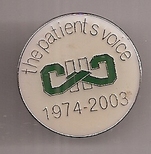
The ACHCEW Memorial Badge
|
-
ACHCEW
- COMMITTEES
-
CHCs
- Introduction to CHCs
- CHC Regulations
- How CHCs Worked
- Code of Conduct for CHC Members
- Code of Practice on Consultation
- Public Activities Material
- CHCs in Action - (Publication)
- The Politics of Consumer Representation - A Study of CHCs
- The Legal History of CHCs
- Legal - re. Closures
- Directory of CHCs + LINks >
-
Training and Skills for Members
>
- Skills for New CHC Members
- Understanding the NHS and the Role of the CHC
- Developing Skills as a CHC Member
- Links to CHCs and Charities Database
- Skills for CHC Chairs
- Other Training Documents
-
PPI Short Courses
>
- Introduction and Surveys
- Core 1 - User Involvement in Health and Social Care
- Core 2 - What does User Involvement Mean?
- Core 3 - Feeling Empowered in User Involvement
- Theme 1 - Involvement in Service Planning and Improvement
- Theme 2 - Involvement in Research and Activity
- General Units
- Link Person Handbook
-
Papers
- IN-HOUSE Staff Publications - Introduction >
- CHC Listings
- CHC News >
- CHC Public Activities Materials
- NHS Dispute - Complaint
- Presentations >
- Foundation Trust Hospitals
- GMC
- Healthwatch England
- Health Scrutiny
- House of Commons Health Committee
- ICAS
- King's Fund
- Normanton Hospital Inquiry
- PALS
- Local Involvement Networks - LINKs
-
PPI + LINks
>
- PPI Academic
- PPI in the NHS >
- Patient Empowerment >
- Public Representation of Health Bodies
- Women's Health Publications >
- Enter and View
- LINks Foundation Trusts
- Kingston Hospital + Kingston PCT LINk
- Public Involvement in the Private Finance Initiative
- Response to the Health Committee Report
- Private Hospitals
- PUBLICATIONS
- PRESS
- Cartoons
- Gallery