-
ACHCEW
- COMMITTEES
-
CHCs
- Introduction to CHCs
- CHC Regulations
- How CHCs Worked
- Code of Conduct for CHC Members
- Code of Practice on Consultation
- Public Activities Material
- CHCs in Action - (Publication)
- The Politics of Consumer Representation - A Study of CHCs
- The Legal History of CHCs
- Legal - re. Closures
- Directory of CHCs + LINks >
-
Training and Skills for Members
>
- Skills for New CHC Members
- Understanding the NHS and the Role of the CHC
- Developing Skills as a CHC Member
- Links to CHCs and Charities Database
- Skills for CHC Chairs
- Other Training Documents
-
PPI Short Courses
>
- Introduction and Surveys
- Core 1 - User Involvement in Health and Social Care
- Core 2 - What does User Involvement Mean?
- Core 3 - Feeling Empowered in User Involvement
- Theme 1 - Involvement in Service Planning and Improvement
- Theme 2 - Involvement in Research and Activity
- General Units
- Link Person Handbook
-
Papers
- IN-HOUSE Staff Publications - Introduction >
- CHC Listings
- CHC News >
- CHC Public Activities Materials
- NHS Dispute - Complaint
- Presentations >
- Foundation Trust Hospitals
- GMC
- Healthwatch England
- Health Scrutiny
- House of Commons Health Committee
- ICAS
- King's Fund
- Normanton Hospital Inquiry
- PALS
- Local Involvement Networks - LINKs
-
PPI + LINks
>
- PPI Academic
- PPI in the NHS >
- Patient Empowerment >
- Public Representation of Health Bodies
- Women's Health Publications >
- Enter and View
- LINks Foundation Trusts
- Kingston Hospital + Kingston PCT LINk
- Public Involvement in the Private Finance Initiative
- Response to the Health Committee Report
- Private Hospitals
- PUBLICATIONS
- PRESS
- Cartoons
- Gallery
ACHCEW Commission
The Commission on Representing the Public Interest in the Health Service
In February 1999, ACHCEW announced the setting up of an 'independent commission' to look at how to represent the public interest in the health service. This followed on from the recognition by member CHCs that there needed to be a debate about the future of CHCs, and that this was best put in the context of representing the public interest. A significant amount of work had been done in this area and it was felt that ACHCEW's role, in setting up the Commission, was to provide a forum of different models for the future to be scrutinised, and ways forward in representing the public interest to be identified.
The Commission attracted a wide range of respected and influential members.
In February 1999, ACHCEW announced the setting up of an 'independent commission' to look at how to represent the public interest in the health service. This followed on from the recognition by member CHCs that there needed to be a debate about the future of CHCs, and that this was best put in the context of representing the public interest. A significant amount of work had been done in this area and it was felt that ACHCEW's role, in setting up the Commission, was to provide a forum of different models for the future to be scrutinised, and ways forward in representing the public interest to be identified.
The Commission attracted a wide range of respected and influential members.
The Terms of Reference
To recognise that the ultimate purpose of the NHS is to serve the public interest and to identify the ways in which that public interest can best be served by the achievement of a full and effective system of public accountability.
To recognise that the ultimate purpose of the NHS is to serve the public interest and to identify the ways in which that public interest can best be served by the achievement of a full and effective system of public accountability.
Members of the Commission
Members of the Commission
Will Hutton (Chair)
Will Hutton became Editor of the Observer in March 1996 and was Editor-in-Chief of the Observer since July 1998.
He joined the Guardian in 1990 as Economics Editor and was appointed Assistant Editor in 1995. A former stockbroker, he spent ten years at the BBC where he worked from 1978 1988. Will Hutton's positions included Economics Correspondent for Newsnight (1983-1988), Producer and Director of the Money Programme (1981-1983) and Senior Producer on The Financial World Tonight (1978-1981). He was Editor-in-Chief for the European Business Channel from 1988-1990.
Will Hutton was awarded 'Political Journalist of the Year' by Granada TV's What The Papers Say for his coverage on the 1992 ERM crisis.
His book The State We're In was first published in 1995 and has sat high on the best-seller list ever since. It is widely regarded as a highly important book earning Will Hutton headlines such as 'why this book is such a danger?'
Will Hutton is a member of the governing council of the Policy Studies Institute and is governor of the London School of Economics. He is also chair of the Employment Policy Institute, a think tank on employment matters.
Will Hutton became Editor of the Observer in March 1996 and was Editor-in-Chief of the Observer since July 1998.
He joined the Guardian in 1990 as Economics Editor and was appointed Assistant Editor in 1995. A former stockbroker, he spent ten years at the BBC where he worked from 1978 1988. Will Hutton's positions included Economics Correspondent for Newsnight (1983-1988), Producer and Director of the Money Programme (1981-1983) and Senior Producer on The Financial World Tonight (1978-1981). He was Editor-in-Chief for the European Business Channel from 1988-1990.
Will Hutton was awarded 'Political Journalist of the Year' by Granada TV's What The Papers Say for his coverage on the 1992 ERM crisis.
His book The State We're In was first published in 1995 and has sat high on the best-seller list ever since. It is widely regarded as a highly important book earning Will Hutton headlines such as 'why this book is such a danger?'
Will Hutton is a member of the governing council of the Policy Studies Institute and is governor of the London School of Economics. He is also chair of the Employment Policy Institute, a think tank on employment matters.
Professor Conor Gearty
Conor Gearty was Professor of Human Rights Law at King's College London and a Barrister at Essex Court Chambers. He was the author of numerous books and articles on human rights and civil liberties, including (with KD Ewing) Freedom Under Thatcher; Civil Liberties in Modern Britain (1990); His Struggling Against the State: Civil Liberties and the Rule of Law in Britain, 1914-45, co-authored with KD Ewing, will be published this Summer by OUP.
Conor Gearty was Professor of Human Rights Law at King's College London and a Barrister at Essex Court Chambers. He was the author of numerous books and articles on human rights and civil liberties, including (with KD Ewing) Freedom Under Thatcher; Civil Liberties in Modern Britain (1990); His Struggling Against the State: Civil Liberties and the Rule of Law in Britain, 1914-45, co-authored with KD Ewing, will be published this Summer by OUP.
Susie Parsons
Susie Parsons was the Chief Executive of the Commission for Racial Equality.
Susie Parsons' work experience spanned the health service, local government and the voluntary sector. Having begun her working life as a teacher of French in an inner-city school in London, Susie Parsons subsequently held the posts of Director of Community Education for Shelter, Housing Projects Officer at North Kensington Law Centre, Secretary to Paddington and North Kensington Community Health Council, General Manager of the London Energy and Employment Network and Head of Press, Publicity and Information for the London Borough of Hackney.
She was appointed to the post of Executive Director of London Lighthouse in September 1994 and became its Chief Executive in January 1997.
Susie Parsons was the Chief Executive of the Commission for Racial Equality.
Susie Parsons' work experience spanned the health service, local government and the voluntary sector. Having begun her working life as a teacher of French in an inner-city school in London, Susie Parsons subsequently held the posts of Director of Community Education for Shelter, Housing Projects Officer at North Kensington Law Centre, Secretary to Paddington and North Kensington Community Health Council, General Manager of the London Energy and Employment Network and Head of Press, Publicity and Information for the London Borough of Hackney.
She was appointed to the post of Executive Director of London Lighthouse in September 1994 and became its Chief Executive in January 1997.
Professor Allyson Pollock
Allyson Pollock was head of the Health Services and Health Policy Research Unit at the School of Public Policy, University College London, and Director of Research and Development at University College London Hospitals Trust.
She trained in medicine in Scotland and worked in hospitals in Edinburgh and Leeds before moving to London. She had worked in London since 1987 and had extensive senior experience of working in health authorities in Newham, Tower Hamlets, Hackney, Camden & Islington and Merton, Sutton & Wandsworth.
She spent a year in the United States in 1995-6 as a Harkness Fellow. She was published widely on a number of areas including health policy, rationing, cancer epidemiology, information and statistics and long-term care.
Allyson Pollock was head of the Health Services and Health Policy Research Unit at the School of Public Policy, University College London, and Director of Research and Development at University College London Hospitals Trust.
She trained in medicine in Scotland and worked in hospitals in Edinburgh and Leeds before moving to London. She had worked in London since 1987 and had extensive senior experience of working in health authorities in Newham, Tower Hamlets, Hackney, Camden & Islington and Merton, Sutton & Wandsworth.
She spent a year in the United States in 1995-6 as a Harkness Fellow. She was published widely on a number of areas including health policy, rationing, cancer epidemiology, information and statistics and long-term care.
Joyce Struthers
Joyce Struthers was elected Chair of the Association of Community Health Councils for England and Wales (ACHCEW) in July 1998. She is ACHCEW's representative on the Management Board of the BMA's Doctor/Patient Partnership and on the Middlesex University Ethical Committee for the Practice of Traditional Chinese Medicine.
Joyce Struthers served as a generalist member of North Bedfordshire Health Authority from 1985 to 1989. Shortly afterwards, she became a member of the North Bedfordshire Community Health Council, which she chaired from 1992 to 1996. She was a Marriage Guidance (now Relate) counsellor from 1971 to 1983, a voluntary worker in the Bedfordshire Divorce Conciliation Service from 1982 to 1994 and Vice President of Bedfordshire Care Support Network for People with Learning disabilities from 1989 to 1997.
Joyce Struthers worked as an approved Lay Assessor with the Quality Control and Inspection Unit of Bedfordshire County Council's Social and Community Care Department. She was the CHC observer on the Bedfordshire Joint Planning Team for Mental Health Services and the Bedfordshire County Council Quality Control Advisory Committee.
Joyce Struthers was elected Chair of the Association of Community Health Councils for England and Wales (ACHCEW) in July 1998. She is ACHCEW's representative on the Management Board of the BMA's Doctor/Patient Partnership and on the Middlesex University Ethical Committee for the Practice of Traditional Chinese Medicine.
Joyce Struthers served as a generalist member of North Bedfordshire Health Authority from 1985 to 1989. Shortly afterwards, she became a member of the North Bedfordshire Community Health Council, which she chaired from 1992 to 1996. She was a Marriage Guidance (now Relate) counsellor from 1971 to 1983, a voluntary worker in the Bedfordshire Divorce Conciliation Service from 1982 to 1994 and Vice President of Bedfordshire Care Support Network for People with Learning disabilities from 1989 to 1997.
Joyce Struthers worked as an approved Lay Assessor with the Quality Control and Inspection Unit of Bedfordshire County Council's Social and Community Care Department. She was the CHC observer on the Bedfordshire Joint Planning Team for Mental Health Services and the Bedfordshire County Council Quality Control Advisory Committee.
Stephen Thornton
Stephen Thornton had been Chief Executive of the NHS Confederation from December 1997. He had previously been Chief Executive of Cambridge and Huntingdon Health Authority since 1993.
His NHS career began in 1979 when he was recruited to the National Graduate Management Training Programme. He trained at Manchester Business School and held a number of hospital appointments in the Manchester/Salford area before moving to Cambridge in 1983 to take up post of Administrator at Fulbourn Hospital. In 1985 he became one of two hospital level General Managers in the Authority. He was responsible for managing services for mentally ill people, people with learning difficulties, general community health services, and health promotion services.
He moved to the East Anglian Regional health Authority in June 1989 initially as head of Corporate Development to lead the Region's implementation of the 1990 Reforms, where he co-directed the "Rubber Windmill" simulation exercise, winner of the European Health Care Management Association award for excellence in management. He subsequently held the posts of Director of Performance Management and Director of Planning at the RHA.
Stephen Thornton had been Chief Executive of the NHS Confederation from December 1997. He had previously been Chief Executive of Cambridge and Huntingdon Health Authority since 1993.
His NHS career began in 1979 when he was recruited to the National Graduate Management Training Programme. He trained at Manchester Business School and held a number of hospital appointments in the Manchester/Salford area before moving to Cambridge in 1983 to take up post of Administrator at Fulbourn Hospital. In 1985 he became one of two hospital level General Managers in the Authority. He was responsible for managing services for mentally ill people, people with learning difficulties, general community health services, and health promotion services.
He moved to the East Anglian Regional health Authority in June 1989 initially as head of Corporate Development to lead the Region's implementation of the 1990 Reforms, where he co-directed the "Rubber Windmill" simulation exercise, winner of the European Health Care Management Association award for excellence in management. He subsequently held the posts of Director of Performance Management and Director of Planning at the RHA.
Stuart Weir
Stuart Weir was Senior Research Fellow in Democracy and Human Rights at the University of Essex; Director of the Democratic Audit at the University of Essex; an international Consultant and Training Adviser on the Consolidation of Democracy and Human Rights; and an active academic and journalist. He is currently engaged on a project to measure democracy country-by-country throughout the world for International IDEA (Institute for Democratic and Electoral Assistance). He was also an Associate Consultant to the British Council.
The Democratic Audit had published 18 reports on democratic matters, some of which Stuart Weir authored and all of which he edited. The most influential of these have been three reports on quangos, or para-statal organisations, in the United Kingdom, one of which was published jointly with Channel 4 TV, which broadcast a documentary, Behind Closed Doors, based on the Audit's researches.
Stuart Weir was Senior Research Fellow in Democracy and Human Rights at the University of Essex; Director of the Democratic Audit at the University of Essex; an international Consultant and Training Adviser on the Consolidation of Democracy and Human Rights; and an active academic and journalist. He is currently engaged on a project to measure democracy country-by-country throughout the world for International IDEA (Institute for Democratic and Electoral Assistance). He was also an Associate Consultant to the British Council.
The Democratic Audit had published 18 reports on democratic matters, some of which Stuart Weir authored and all of which he edited. The most influential of these have been three reports on quangos, or para-statal organisations, in the United Kingdom, one of which was published jointly with Channel 4 TV, which broadcast a documentary, Behind Closed Doors, based on the Audit's researches.
|
ASSOCIATION OF COMMUNITY HEALTH COUNCILS
1974 - 2003 This site is being maintained on a voluntary basis by Polly Healy ..._________________________________________________________ Please make contact if you have any contributions or suggestions for this site. Click here ... |
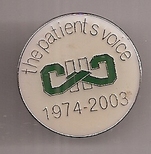
The ACHCEW Memorial Badge
|
-
ACHCEW
- COMMITTEES
-
CHCs
- Introduction to CHCs
- CHC Regulations
- How CHCs Worked
- Code of Conduct for CHC Members
- Code of Practice on Consultation
- Public Activities Material
- CHCs in Action - (Publication)
- The Politics of Consumer Representation - A Study of CHCs
- The Legal History of CHCs
- Legal - re. Closures
- Directory of CHCs + LINks >
-
Training and Skills for Members
>
- Skills for New CHC Members
- Understanding the NHS and the Role of the CHC
- Developing Skills as a CHC Member
- Links to CHCs and Charities Database
- Skills for CHC Chairs
- Other Training Documents
-
PPI Short Courses
>
- Introduction and Surveys
- Core 1 - User Involvement in Health and Social Care
- Core 2 - What does User Involvement Mean?
- Core 3 - Feeling Empowered in User Involvement
- Theme 1 - Involvement in Service Planning and Improvement
- Theme 2 - Involvement in Research and Activity
- General Units
- Link Person Handbook
-
Papers
- IN-HOUSE Staff Publications - Introduction >
- CHC Listings
- CHC News >
- CHC Public Activities Materials
- NHS Dispute - Complaint
- Presentations >
- Foundation Trust Hospitals
- GMC
- Healthwatch England
- Health Scrutiny
- House of Commons Health Committee
- ICAS
- King's Fund
- Normanton Hospital Inquiry
- PALS
- Local Involvement Networks - LINKs
-
PPI + LINks
>
- PPI Academic
- PPI in the NHS >
- Patient Empowerment >
- Public Representation of Health Bodies
- Women's Health Publications >
- Enter and View
- LINks Foundation Trusts
- Kingston Hospital + Kingston PCT LINk
- Public Involvement in the Private Finance Initiative
- Response to the Health Committee Report
- Private Hospitals
- PUBLICATIONS
- PRESS
- Cartoons
- Gallery